Our Raw Materials
Home » Our Raw Materials
Naturally Sourced Crafted Materials for Timeless Quality
Our raw materials are processed using a blend of traditional techniques and modern practices, ensuring quality while preserving the authenticity. The result is a collection of textiles that reflect craftsmanship, sustainability, and the natural beauty of the materials themselves.
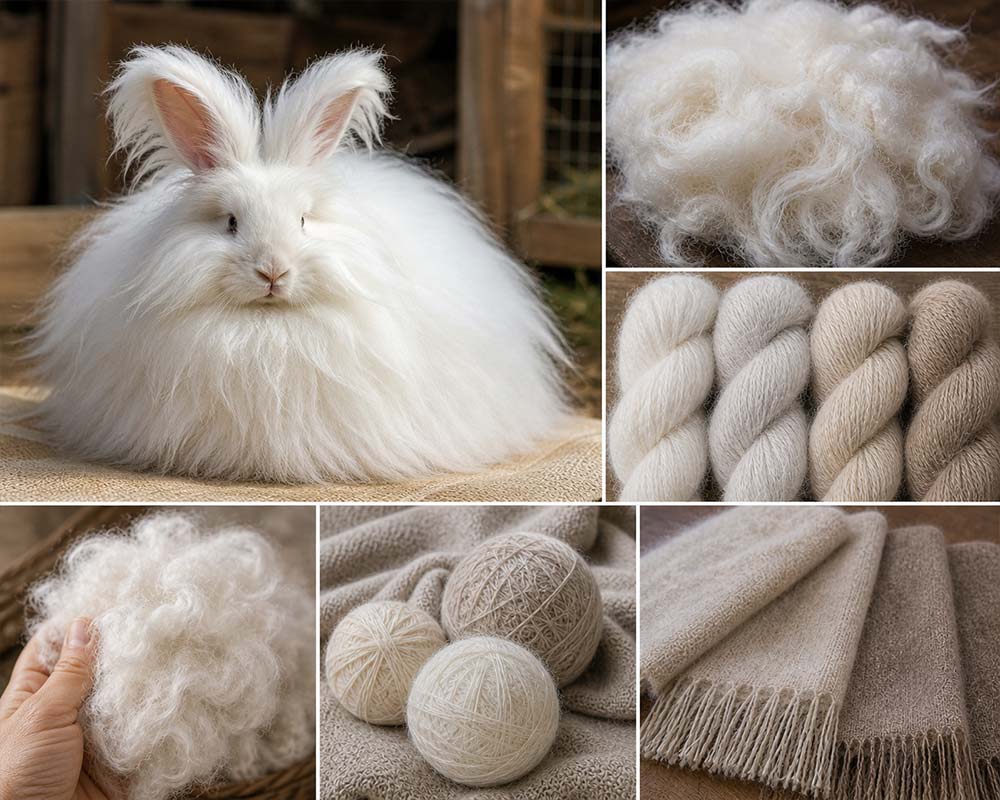
Angora Wool
The Angora rabbit is a variety of domestic rabbit bred for its long, soft wool. The Angora is one of the oldest types of domestic rabbit. Angora rabbits are locally reared in farms all across Kullu. This wool varies from 12 to 14 micron. Angora wool, which is technically a hair, is shorn with the help of scissors as soon as the length of the average fibber is long enough (mostly 70mm or more). The Angora wool is either spun pure / or it is blended with very fine sheep wool which is Australian Merino in origin.
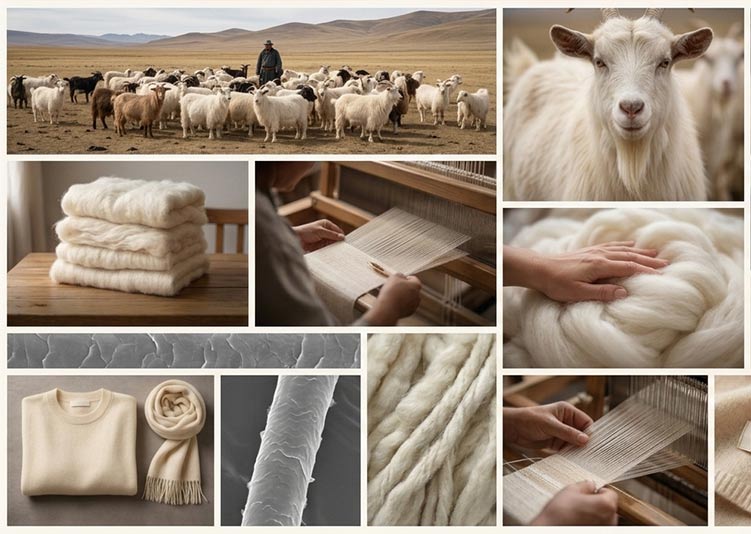
Cashmere
Cashmere production follows a meticulous process, moving from the raw undercoat of specialized goats to the luxurious, soft fabric known worldwide for its warmth and lightness. Beyond the basic production steps, the unique nature of cashmere lies in the incredible biology of the goats and the intensive labor required to harvest it.
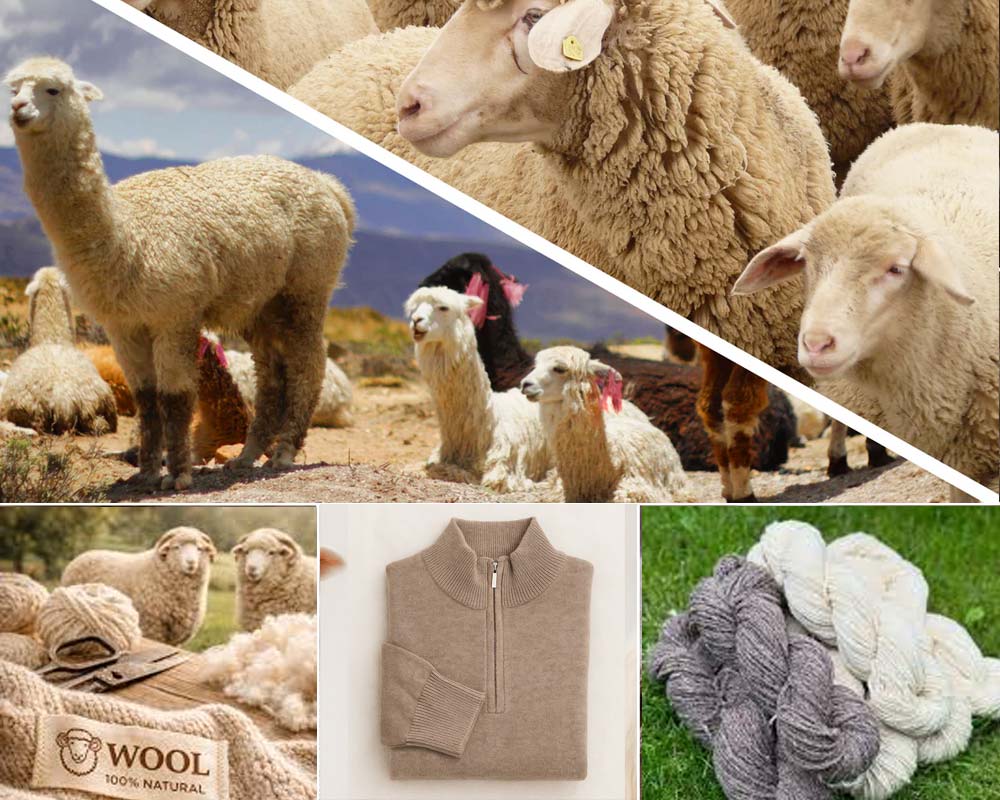
Merino Wool & Other Sheep Wool
Merino is grown year-round by Australia’s 70 million Merino sheep, consuming a simple blend of water, air, sunshine and grass. Merino benefits from what designers call excellent handle and drape. Merino fibers are extremely fine, enabling them to bend far more than traditional, coarser wool fibers. The merino used by us varies from 17 to 24 micron. This makes Merino wool feel soft and luxuriously gentle next to your skin.
Besides Australian wool, local crossbred wool in the pure form is also handspun and used for making garments as it is also quite soft and has a good handle and feel to it. This wool varies from 26 to 30 microns. The other wool used is the local sheep wool which mostly goes into knitting footwear and handbags.

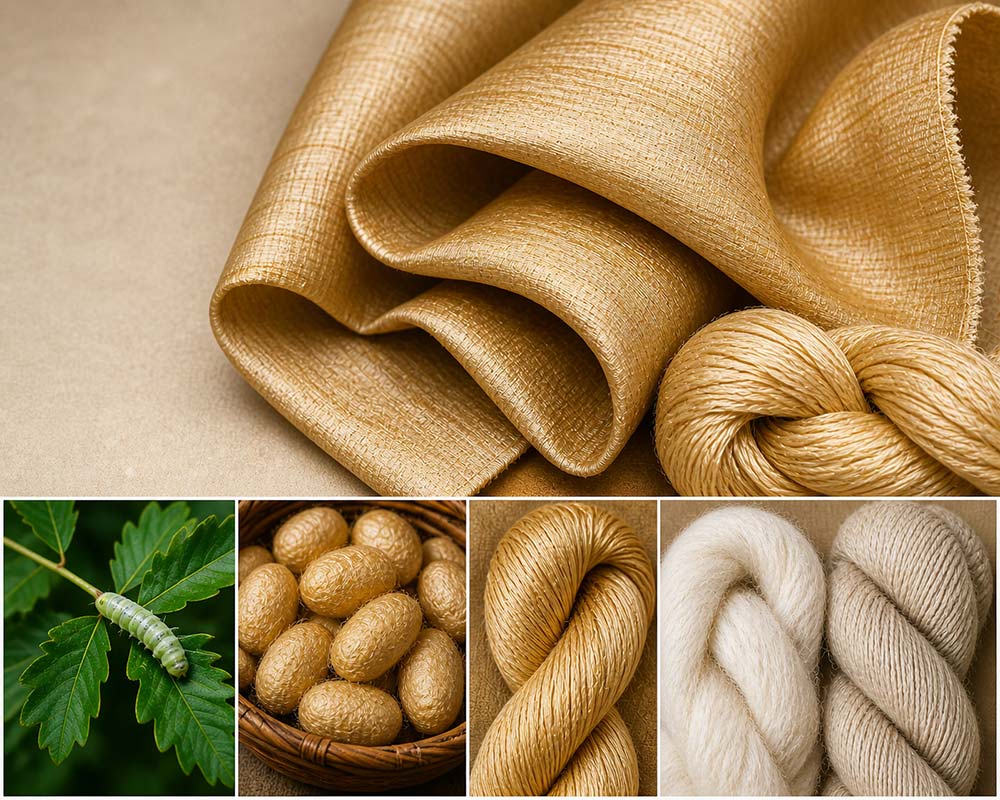
Tussar Silk
Tussar which is a wild variety of silk, the worms feeding mostly on Oak leaves unlike the conventional silk in which the worms feed on Mulberry leaves, the fiber is lustrous and has a nice golden color to it. The fiber is handspun pure and or / blends with angora and/or with sheep wool are made and spun into different qualities.
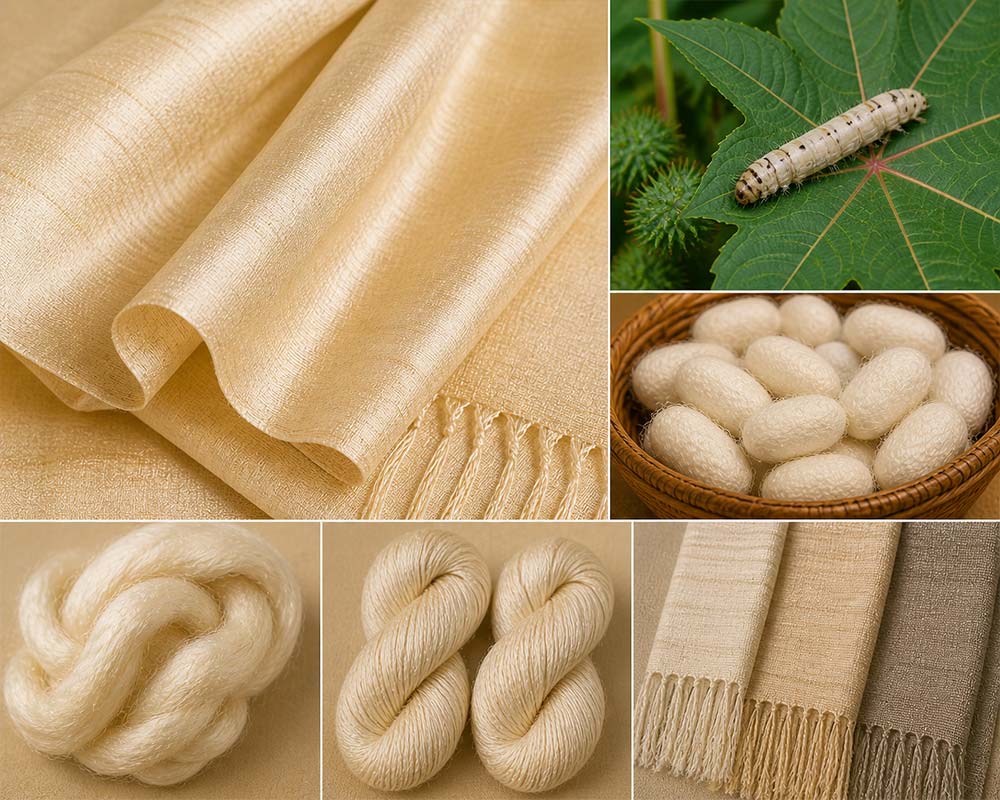
Eri Silk
Eri silk another silk quality in which the worms feed on Castor leaves and produce a fine very light golden fibers which has fine sheen blends well with the wool fibers and is used make shawls and stoles with eri silk being used in the warp.
Yak Wool